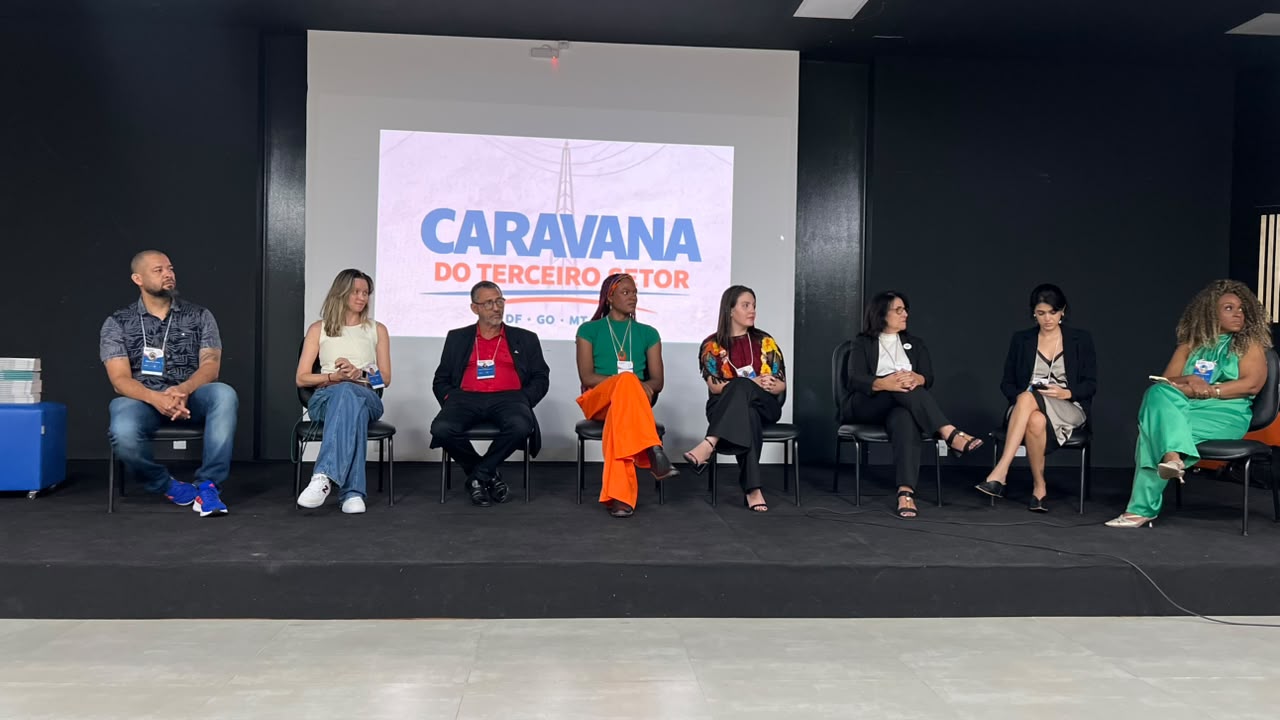
The Global Challenge, carried out by the André and Lucia Maggi Foundation, in 2019, aimed to encourage, through financial incentives, training and mentoring, 18 groups of youngsters aged between 13 and 29, who carry out projects in their communities, with a focus on causing transformative social impacts in several areas, such as health, education, environment, among others.
Through the projects selected in the Global Challenge, the Foundation indirectly impacted 4 states: Mato Grosso, Amazonas, Rondônia and Paraná, totaling approximately 16,158 people benefited by the projects selected in the Global Challenge.
The participants considered that taking part in the Global Challenge provided behavioral, skills and attitudes development that collaborate to exercise leadership in their communities.
The selection process was carried out by an evaluation committee and the pre-selected, went through the popular voting stage, which took place on the Foundation’s website in October 2019 and registered 11,697 votes. The most winning projects received financial resources of BRL 2 thousand (Seeding category – Semear) and BRL 10 thousand (Sprouting category – Germinar) and took part in the Immersion, held in December 2019 in Cuiabá.
Throughout 2020, the Foundation’s team conducted online mentoring on project management and followed up on initiatives. Due to the pandemic, the execution of the projects was impacted and some needed to redirect their actions to emergencies, such as donation of basic food baskets and hygiene products, emotional support, prevention against domestic violence, prevention against COVID-19 and pedagogical support for students in online classes.
The Global Challenge was inspired by the Design for Change, a global movement that is present in 65 countries and is represented in Brazil by the program Criativos da Escola, from Instituto Alana, which carries out its national award: the Desafio Criativos da Escola – School Creative Challenge.
Check out the selected projects.
Check out the main actions carried out by the Global Challenge projects:
Seeding Category
1) Helping Those Who Need to Speak Project / Campo Novo Do Parecis-MT
The ‘live shows’ took place on two radio stations in the city, which conceded their space during prime time. The transmission took place via the AGEM Project Facebook and through the Campo Novo Portal, the most accessed news site in the city. In addition, all broadcasts have been recorded and are available to the community. There were awards for those who answered questions and took part in the show. In total, 22,058 people were reached, with an average of 3,676 views per show. The project had the support of 24 people, and within this team of volunteer there were psychologists, translators, sign language interpreters, and technicians.

2) Accessible City Project / Campo Novo Do Parecis-MT
At first the project would research accessibility in supermarkets, health centers and banks. Due to the social isolation imposed by the pandemic, it was decided to revert the resource to help a municipality organization that serves People with Disabilities and who needed materials to protect themselves against COVID-19, both for professionals and patients. The materials were used for children and workers at APAE in Campo Novo do Parecis. In total, 152 people and their families directly benefited, 117 students and 35 employees.

3) Connection Project / Cuiabá-MT
Aimed at female empowerment and gender equity. During the pandemic, actions were carried out in the distance learning/online format, with 2 meetings with circa 20 girls/women taking part in the virtual chat. In this action with homeless people and garbage collectors, approximately 100 women were reached, offering personal hygiene kits donations.
The project had partnerships and actions carried out with external people, such as: a raffle of two T-shirts with an online store that seeks to talk about women’s empowerment. In addition, an action was taken in partnership with the AMARrmita Cuiabá project, which aims to distribute lunch boxes to homeless people.

4) From School to the Field Project: Producing knowledge/ Querência-MT
Aimed to engage a school for the concept of a more sustainable city, with incentives to cultivate home gardens. However, the initial focus of working with families dedicated to the fruit production chain, in the Brasil Novo Settlement, was not due to the pandemic. The group then carried out actions to contribute to the training of youngsters connected to the development of the city where they live, promoting healthy habits and food security. The project impacted a total of 7 families and had the support of the Social Assistance Municipal Secretariat, CRAS and the ‘Ovelhinhas de Jesus’ Beneficent Association.

5) Bursting Bubbles Project 2.0 / Cuiabá-MT
Before the pandemic, they raised the awareness of the school community through meetings with education department representatives, forming a Connection Center, composed of students and volunteer employees. During the pandemic, they purchased materials for the multifunctional resource room at the Cuiabá Campus of the Federal Institute of Mato Grosso (IFMT). In general, the project impacted an average of 300 students and was also supported by the IFMT.

6) Shelter Project – A second chance / Cuiabá-MT
The project’s idea was to promote actions aimed at inserting immigrants into the labor market. The main results achieved were the campaign to collect clothing, food, shoes and appliances; and the Children’s Day, with the distribution of toys, the morning of recreation, and the I Copa do Imigrante. In all, 500 people benefited from the project.
The project also had the support of the Mato Grosso Football Federation (FMT), Águas Brunado, Sports, Leisure and Culture Municipal Secretariat, Suco Prats and Colégio Espaço do Saber, in addition 30 volunteers helping out.

7) I want to listen to you project / Itacoatiara-AM
Social isolation resulted in a larger group of youngsters who had depression and anxiety symptoms. At first the project was aimed at identifying and helping these young people, but due to social isolation, this need for support was no longer just for them but also included the elderly, adults and children. Through a partnership with the psychologist, Raphael Cavalcante, and the support of volunteers from the community, the project managed to impact circa 500 people by having live streaming shows with themes focused on the prevention and treatment of depression. In addition, plant seedlings were also donated in order to render gardening an ally in fighting depression.

8) Papelota Project: the paper that goes, but comes back! / Cuiabá-MT
The project arose from the need identified by the team members and the lack of reading habit noticed in low-income children.
Due to the COVID-19 pandemic, face-to-face contact between students and the target audience was not possible. When observing the need for social distancing, the team identified that families were spending over a month with a single basic food basket. Through a partnership with Notre Dame College and Safra Alimentos, the project team distributed basic food baskets to over 50 families.

9) Basquepet Children’s Project / Itacoatiara-AM
The project was developed after the group realized that through sports activities offered during the school shift could reduce the risk of social vulnerability. Due to the pandemic, it was not possible to use the sports arena so to carry out all the activities intended in the action plan. Through a partnership with the Municipal Sports Department to provide a training site, the project initially served 40 people, but with social isolation the number decreased to 20 participants.
The project provided children with health and well-being through sports, in addition to encouraging responsibility for the environment, since they brought empty plastic bottles from home which were donated to the Sprouting category project, Community Fair Project for Vegetables, to serve as deposit for plant seedlings.

Sprouting Category
1) Clean Amazonas Project: Embark on this idea / Itacoatiara-AM
Environmental awareness actions were carried out, on the disposal of solid waste on riverside vessels through conversation circles. During the pandemic, guidance folders were distributed along with the donation of alcohol gel kits, acquired through a partnership with Loja Universo das Maquiagens. In addition to disseminating through social networks and T-shirts for environmental awareness, implementing selective collection by donating trash cans for riverside vessels and installing selective trash cans in the ports of Itacoatiara. Through these actions and with the support of 30 volunteers, the project impacted 2,000 people.

2) Cerejeiras Theater Company Project – COMTECER / Cerejeiras-RO
Due to the pandemic, it was possible to carry out activities involving the public until the end of March, before the social isolation decrees. Therefore, the group acquired materials to be used in future projects, when the effects of the pandemic ease. An average of 150 people were reached in the theatrical presentations made. In the “Alforria Cultural” project, we counted with the participation of prisoners from the municipal prison, the Community Council on Penal Execution – Comarca de Cerejeiras-RO, with the project “O Ser Palhaço – Being a Clown” being developed in partnership with the Casa de Acolhimento, City Hall, and Shotokan Karate Academy “Budô”.

3) Conventional and Non-Conventional Organic Vegetables Community Fair Project in Itacoatiara / Itacoatiara-AM
A garden was built and implanted, conventional and non-conventional organic vegetables were supplied to the population in economic vulnerability and the delivery was made at their home, which was a success in this pandemic period. It was also carried out a system to re-use materials that would be dumped. The re-used materials were: plastic bottles, plastic egg carton and packaging. Another important result was the community fair exhibition in the municipality. Through these actions, the project impacted 1,500 people.
The project had partnerships with Matadouro Bovinorte and professor Santiago Linório Ferreyra Ramos.

4) Nós do Renascer and Motirô Project / Cuiabá-MT
The foundation of the project was to qualify equipment for public use for a common good with the participation of those who will use it. It was identified that in the pandemic period, the neighborhood health post needed coverage in order to serve the population that sought medical care, that could protect themselves from the sun. The project counted with the support of bricklayers, nurses and friends, totaling 20 volunteers, for the construction of the covered area. Through the actions carried out by the project the population served by the health center in the Jardim Renascer neighborhood in Cuiabá was positively impacted, circa 4,360 people.

5) The Fabulous Science Circus Project / Manaus-AM
Participants reported that mentoring helped them better understand and structure the Fabulous Science Circus not only as a project, but also as an institution. They improved communication with volunteers and the administration, managed to better plan next steps, think of a solution to minimize, in some way, the effect that the pandemic had with a group of families in the community in which they work. Thus, basic food baskets, educational kits and a booklet with content aimed at preventing COVID-19 were distributed. Finally, they started developing a website to create an online store, which will serve to make the project even more economically sustainable.
The project impacted, by taking basic food baskets and school and hygiene kits, over 250 people directly; the online activities, live shows and meetings directly reached circa 50 people; summing up over 300 people impacted.

6) Project changes with Barbarus / Itacoatiara-AM
Through a Barbers Course offered free of charge, 40% of students are working in their own barbershop or providing services in the city’s barbershops, helping to increase the source of family income and generating jobs. Altogether 70 students took part in the course.

7) Wings and Roots Project / Maringá-PR
The ‘Raízes e Asas – Wings and Roots’ project arose from the difficulty of Haitian immigrants adapting to the Portuguese language. For this reason, classes were given through an online platform, teaching the Portuguese language, in order to help them integrate themselves into Brazilian society, thereby reducing cases of exploitation at work, xenophobia and gender inequality, facilitating their insertion into the labor market. However, with social isolation and the lack of face-to-face contact with the community, some difficulties arose, such as the community’s adherence to video classes and the platform used, little access to technology, among others. The project is seeking to implement improvements in the platform used for classes, in addition to courses to help boost the platform, aiming to reach the largest number of immigrants possible.
The actions carried out impacted 398 people. They counted with the support of a Haitian immigrant, Carlos Henry François, who helps with the translation and contact with the community, in addition to four teachers from the Santa Isabel Parish of Maringá- PR, who help with the validation of the platform and contents, and a student from the State University of Maringá, who helps with technical knowledge contracting maintenance for the platform. In all, six people collaborated externally in the action plan.

8) Voluntemos Project / Cuiabá-MT
Despite not having the digital platform yet, the ‘We will volunteer’ project had a lot of visibility and actions through its Instagram. They partnered with projects and social causes for marketing and dissemination, seeking greater visualization in the region of Cuiabá and Várzea Grande. However, there is no way to measure the number of people reached by these views, with the exception of the number of Instagram followers, which are currently 300. They counted on the support of four external volunteers in executing the action plan.



 16 out 2026